
How Much Does an Attic Remodel Cost?
The cost of converting an attic depends on what you want to transform the space into. Creating a basic storage area requires different resources than building a fully functional living space with electricity, heating, cooling, and plumbing. We’ll help you understand the specific factors that influence the cost to finish an attic. Once you know what drives the budget, you can make informed decisions about your attic remodel and plan a transformation that works for your family. We’ll also share inspiring ideas to get you started.
What Determines the Cost to Finish an Attic?
Every attic remodeling project comes with its own unique considerations. When contractors assess your project, they evaluate several key factors that directly impact the scope and complexity of the transformation. Understanding these elements helps you make informed decisions.
Structural Modifications and Roof Height
One of the first things any contractor will examine is whether your attic meets the “Rule of 7s,” a building code guideline used to determine whether an attic has enough space to be legally converted into a habitable living space. This rule requires that finished living spaces have ceilings at least seven feet high over at least 50% of the usable floor area. If your attic doesn’t meet this standard, raising the roof or adding dormers becomes necessary to create the required headroom.
Staircase installation adds another layer of complexity to structural planning. Pull-down ladders work fine for occasional storage access, but living spaces require permanent staircases that meet specific rise and run codes. Fitting a code-compliant staircase into your existing floor plan often requires structural headers and framing adjustments that impact the overall project scope.
These structural changes require significant work, which is why the cost to finish an attic can vary so widely between homes. Your home’s existing construction determines whether you’re working with what’s already there or making substantial modifications that add to the overall cost.
Extending HVAC, Electrical, and Plumbing Systems
Attics weren’t originally designed as living spaces, so your existing systems likely won’t handle the extra load without upgrades. Your HVAC system may need to be extended to reach the new space, or you might consider installing a separate mini-split system to handle heating and cooling independently.
Electrical panels sometimes require upgrades to accommodate additional circuits for lighting, outlets, and climate control. Your remodeling contractor will consider all these when determining how much it will cost to finish your attic.
Windows, Dormers, and Egress Requirements
Natural light and emergency exits are critical considerations when creating livable attic spaces. For example, if you want to transform your attic into a bedroom or home office, it helps to have an egress window large enough for safe escape in an emergency. These specialized windows must meet specific size requirements to ensure occupants can exit quickly if needed.
Dormers offer a practical solution that addresses multiple needs at once. They add valuable square footage by extending usable floor space, bringing in natural light that makes the area feel more inviting, and accommodating egress windows. The trade-off is that dormer installation involves significant roofing and exterior siding work, as contractors must modify your home’s exterior envelope while maintaining weatherproof integrity. All these add to the overall cost of finishing your attic.
Insulation and Finishing Materials
Attics face extreme temperature swings throughout the year. In the Greater Harrisburg Area, for example, summer heat can make uninsulated attics unbearably hot, while indoor heat can escape through inadequate insulation during freezing winter temperatures.
High-performance insulation, like spray foam, creates an effective thermal barrier that keeps your new space comfortable year-round. Proper roof venting works hand in hand with insulation to protect your home. Without adequate ventilation, moisture can accumulate and compromise both your insulation and your home’s structural integrity.
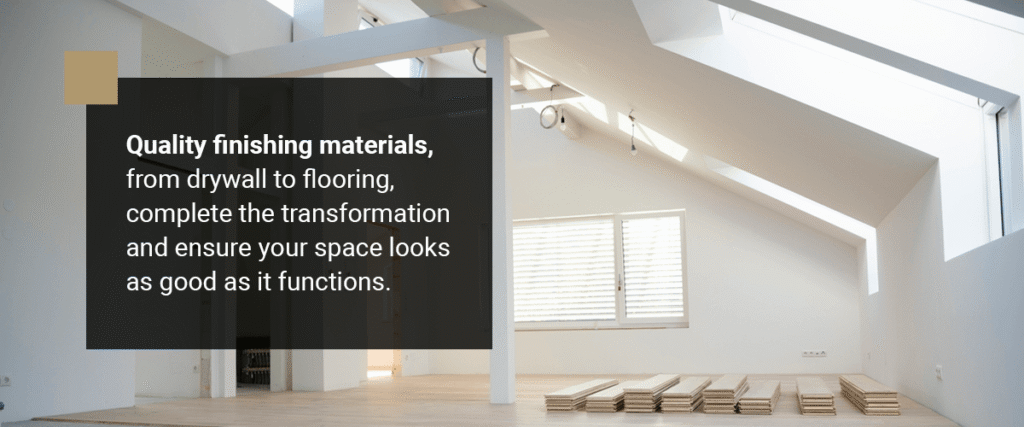
Quality finishing materials, from drywall to flooring, complete the transformation and ensure your space looks as good as it functions.
Finished Attic Ideas
Understanding these different project types is key to maximizing your remodeling budget, as it helps you prioritize the features that matter most to your family. Whether you’re adding square footage for practical storage or creating a beautiful new living area, it’s best to work with professionals to ensure your vision comes to life smoothly.
Attic Storage
The most budget-friendly attic transformation focuses on creating an organized storage space. This approach involves basic flooring, adequate lighting, and insulation to protect your belongings from Pennsylvania’s variable weather. You won’t need high-end finishes or full climate control, making this option perfect for homeowners who simply need more space to organize seasonal items, holiday decorations, or family keepsakes.
Attic Living Spaces
Converting your attic into a bedroom, home office, or playroom requires meeting livable code compliance standards. Attic conversion costs increase here because you need proper heating and cooling, egress windows for safety, finished drywall, and flooring suitable for daily use. These spaces must function comfortably in all seasons and provide the same quality and safety as any other room in your home.
Walk-Up Attic
This term specifically refers to adding a permanent staircase to replace a pull-down ladder. While it might seem like a simple upgrade, walk-up access requires significant structural framing work. The staircase needs proper support, adequate headroom, and compliance with building codes for rise, run, and width. This investment dramatically improves accessibility and transforms how you use your attic space.
Attic Bathroom
Adding a bathroom to your attic represents the biggest investment but offers tremendous convenience. This project requires extending plumbing stacks and water lines up to the top floor, which involves cutting through existing structures and connecting to your home’s main plumbing system. Waterproofing, proper ventilation, and careful planning ensure everything functions reliably for years to come.
Loft Conversion
Loft conversions differ from fully enclosed attic spaces because they remain open to the floor below. This openness affects how you plan for noise control and heating and cooling compared to a completely sealed room. Lofts create dramatic architectural interest and can serve as reading nooks, creative studios, or cozy lounging areas while maintaining a visual connection to your home’s main living spaces.
Transform Your Attic With Creative Building Concepts
Since attic conversion costs vary based on structural requirements, design choices, and the scope of your vision, working with a design-build firm gives you the clearest picture of your investment.
Creative Building Concepts offers comprehensive home remodeling services throughout the Greater Harrisburg Area, including Camp Hill, Carlisle, Harrisburg, and Mechanicsburg. We assess every detail of your attic and provide transparent guidance on how to transform the space into exactly what you want. We take your concerns seriously and make recommendations that work best for your family’s needs and lifestyle. From initial consultation to the final walk-through, we’re committed to creating spaces you’ll love coming home to.
Contact us online or schedule a phone call consultation to speak directly with our team today.

Our team understands that your home is a reflection of who you are, from its curb appeal to the most minor details. Our mission is to help you make a statement through customized and innovative designs.